Otti Seeks CMDs’ Support for Abia Medical City
Emeka

Otti Seeks CMDs’ Support for Abia Medical City
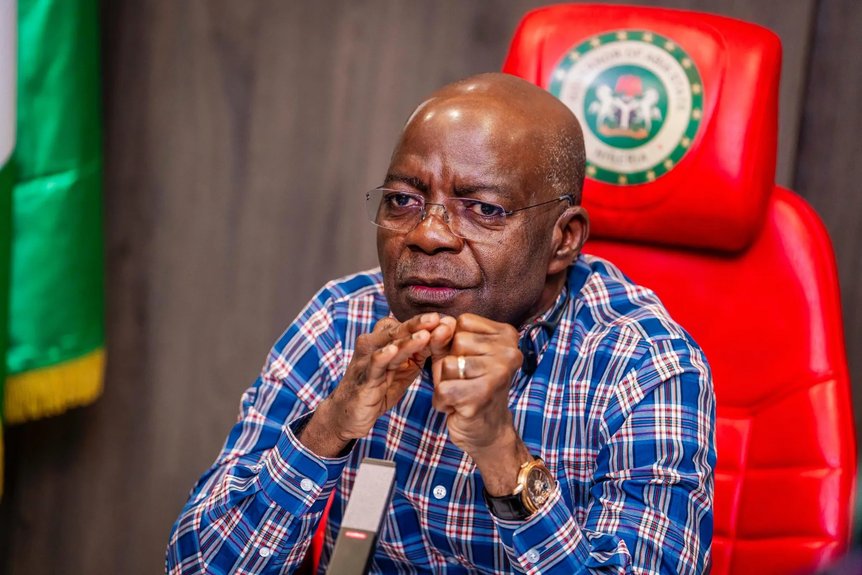
Abia State Governor, Dr Alex Otti, has called on Chief Medical Directors (CMDs) and Medical Directors of Federal Tertiary Hospitals across Nigeria to partner with his administration in actualising the proposed Abia Medical City.
Otti made the call at the Michael Okpara Auditorium, Umuahia, while welcoming participants to the 115th quarterly meeting of the Committee of Chief Medical Directors and Medical Directors of Federal Tertiary Hospitals in Nigeria.
The meeting, hosted by the Federal Medical Centre (FMC), Umuahia, brought together about 85 CMDs, Medical Directors and other senior healthcare officials from across the country to deliberate on challenges facing Nigeria’s tertiary healthcare system and explore possible solutions.
Representing the Governor at the event, his Deputy, Engr. Ikechukwu Emetu, described the decision to host the meeting in Abia as a vote of confidence in the transformation taking place across the state.
Emetu assured the participants that the administration had placed healthcare at the centre of its social infrastructure development agenda, noting that the state government had consistently allocated 15 per cent of its annual budget to the health sector.
He said the government had also recruited healthcare professionals and embarked on the revitalisation and functionalisation of primary healthcare centres across the state.
According to him, hundreds of primary healthcare facilities had been retrofitted and revitalised through Project Ekwueme and other interventions, while efforts were ongoing to improve staffing, equipment and access to quality healthcare at the grassroots.
Otti further disclosed that his administration was restructuring and upgrading specialist and tertiary healthcare institutions, including Abia State Specialist Hospital, Amachara Specialist Hospital and Umunnato Specialist Hospital, with the aim of bringing them to internationally recognised standards.
He said the government was also embracing technology and innovation in healthcare to expand access and improve the delivery of medical services.
The Governor noted that recent federal health performance data had placed Abia among the better-performing states in maternal and infant healthcare outcomes, with significant improvements recorded in maternal and neonatal indicators.
He, however, stressed that his administration was not satisfied with merely improving on previous records.
“Our ambition is to build a healthcare system that can compete with the best anywhere in Africa and internationally,” he said.
Otti also disclosed that the state was pursuing strategic partnerships with medical institutions, development partners, professional bodies, diaspora organisations and private investors.
He cited a proposed partnership with an Egyptian pharmaceutical company to establish a pharmaceutical manufacturing plant in Abia, saying the investment would increase local pharmaceutical production, create jobs, stimulate economic activity and facilitate technology transfer.
The Governor appealed to the medical leaders to support the proposed Abia Medical City, which he described as an integrated healthcare ecosystem that would bring together tertiary and specialist medical services, medical education, research, diagnostics, pharmaceutical manufacturing, medical technology, accommodation and allied services.
He also called for stronger collaboration between Federal Teaching Hospitals and healthcare institutions in Abia.
Otti further encouraged the visiting medical leaders to tour Aba, the state’s commercial hub, to witness the ongoing transformation and identify potential areas for partnership.
Earlier, the Chairman of the Committee of Chief Medical Directors and Medical Directors of Federal Tertiary Hospitals in Nigeria, Prof. Saad Ahmed, said the 115th meeting was hosted in Abia to assess the progress being made at FMC Umuahia and exchange ideas on improving healthcare delivery across federal tertiary hospitals.
Ahmed explained that the committee’s quarterly meetings were held in different parts of the country to enable members to benchmark best practices, identify challenges and share successful initiatives.
He commended the Abia State Government for its interventions in the health sector, particularly the upgrading of primary healthcare centres and general hospitals, recruitment of healthcare workers, expansion of the health insurance scheme, emergency services and ambulance systems.
The committee chairman also praised the relationship between the state government and FMC Umuahia, describing the developments witnessed in Abia as remarkable.
The Chief Medical Director of FMC Umuahia, Prof. Azubuike Onyebuchi, said the meeting was designed to enable CMDs and Medical Directors to assess the performance of host hospitals, identify areas requiring improvement and adopt best practices from one another.
Onyebuchi said FMC Umuahia was collaborating with the Abia State Government to advance primary, secondary and tertiary healthcare, with the ultimate goal of ensuring that residents have access to reliable and quality healthcare services.
He disclosed that the committee would issue a communique at the end of the meeting containing recommendations on challenges affecting the health sector and possible solutions to be presented to government.
Onyebuchi also commended Governor Otti for his support for FMC Umuahia, revealing that the state government was constructing a 20-room VIP ward at the medical centre.
He recalled that when the hospital’s two oxygen plants broke down recently, the Governor responded promptly after he was contacted, describing the intervention as evidence of the administration’s commitment to healthcare delivery.
The meeting provided an opportunity for medical leaders from across Nigeria to exchange ideas, assess healthcare developments in Abia and explore stronger partnerships towards improving healthcare delivery nationwide.
The gathering was attended by the Secretary to the Abia State Government (SSG), Dr Emmanuel Meribole; Commissioner for Health, Prof. Ogbonnaya Enoch Uche; Executive Secretary of the Abia State Primary Healthcare Development Authority, Dr Ulu Kalu Ulu; government officials, health practitioners and other stakeholders.