Uncertainty Deepens as Supreme Court Reserves Verdict on PDP, ADC Crises
theoversightnews
Uncertainty Deepens as Supreme Court Reserves Verdict on PDP, ADC Crises
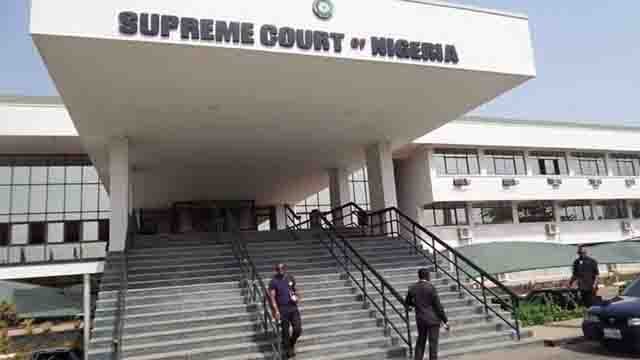
Uncertainty is growing within Nigeria’s opposition space after the Supreme Court reserved judgment on ongoing leadership disputes in the Peoples Democratic Party (PDP) and the African Democratic Congress (ADC).
A five-member panel of the apex court, led by Justice Mohammed Garba, withheld its decision after hearing arguments in separate appeals challenging earlier rulings by lower courts. No date has been fixed for the verdict.
The development comes at a critical time, as the Independent National Electoral Commission (INEC) has already set May 10 as the deadline for political parties to submit their membership registers. The commission has also scheduled the presidential and National Assembly elections for January 16, 2027, with governorship and state assembly polls to follow on February 6, 2027.
INEC further outlined that party primaries and the resolution of related disputes will take place between April 23 and May 30, 2026, while campaigns for the presidential election are expected to begin on August 19, 2026. Governorship campaign activities are slated to start on September 9, 2026.
With both PDP and ADC entangled in multiple legal battles, their ability to organise internal processes and prepare for the elections has been significantly affected. Aspirants seeking tickets on the platforms of either party now face uncertainty, as leadership questions remain unresolved.
Within the PDP, the crisis has led to a split into two factions. One group is led by Tanimu Turaki (SAN), backed by Oyo State Governor Seyi Makinde and Bauchi State Governor Bala Mohammed, while the opposing faction is headed by Abdulrahman Mohammed with the support of Federal Capital Territory Minister Nyesom Wike.
The court is considering appeals filed by Turaki’s faction seeking to validate the party’s national convention held in Ibadan in November 2025. Lower courts had nullified the convention, citing procedural irregularities and internal party violations.
One of the contested rulings came from Justice Peter Lifu, who restrained the party from holding the convention after finding that former Jigawa State Governor Sule Lamido was unfairly excluded from contesting for national chairman. Another judgment by Justice James Omotosho also barred the exercise, citing failure to conduct valid state congresses as required.
Counsel to the appellants, Paul Erokoro (SAN), urged the Supreme Court to overturn the earlier decisions, while opposing lawyers, including J.C. Njikonye (SAN) and Joseph Daudu (SAN), asked the court to dismiss the appeals.
In a related case, the Supreme Court also reserved judgment in an appeal filed by former Senate President David Mark over the leadership crisis in the ADC.
The party has been grappling with internal disputes since the emergence of a new National Working Committee under Mark in July. The crisis stems from disagreements over leadership succession following the exit of former chairman Ralph Nwosu. While Nwosu handed over to Mark’s group, his deputy, Nafiu Gombe, insisted on assuming the role of acting chairman, triggering factional conflict.
The situation has since escalated, leading to multiple legal battles and further fragmentation within the party. A faction aligned with the ADC’s 2023 presidential candidate, Dumebi Kachikwu, also announced a caretaker committee, deepening divisions.
As it stands, the ADC is split into three factions—one led by Mark, another by Gombe, and a third group headed by Kingsley Ogga and backed by Kachikwu.
Mark, through his lawyer, Jubril Okutepa (SAN), argued that the dispute is an internal party matter and should not be subject to judicial intervention. However, opposing parties maintain that the courts acted within their powers.
Following the hearings, the Supreme Court reserved judgment in all the cases, with a date to be communicated to the parties.
Reacting to the development, the Turaki-led faction of the PDP expressed hope that the court’s eventual ruling would strengthen multiparty democracy and prevent the country from drifting toward a one-party system.