Jonathan: Political Thuggery Is Undermining Nigeria’s Democracy
theoversightnews
Jonathan: Political Thuggery Is Undermining Nigeria’s Democracy
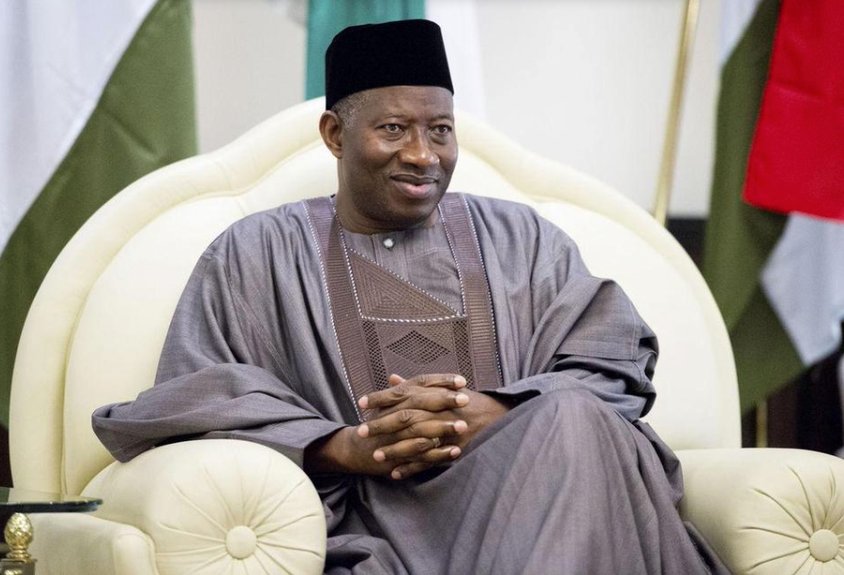
Former President Goodluck Jonathan has expressed concern over the growing influence of political thuggery in Nigeria, describing the country as the only nation in Africa where thuggery has become a profession.
Jonathan made the remarks on Wednesday at the opening ceremony of the Nigerian Bar Association Law Week in Abuja, where he called for urgent reforms in both the electoral and judicial systems to strengthen democracy and restore public confidence in elections.
He lamented that it was troubling that some political thugs reportedly earn more than university professors, noting that it is not uncommon for them to travel first class while academics struggle with basic travel costs.
“Look, Nigeria is the only country where thuggery is a profession in Africa. I don’t want to mention the state.
“Some thugs, when they are travelling out of this country, fly first class, while university professors struggle to manage to buy economy tickets.
“So when we have a country where the thugs fly first class, and the university professor flies economy, that country is like a cone turned upside down, and as a nation, we must do something. We must run elections that thugs will have no role to play,” he said.
Jonathan, who has been granted a waiver by the Tanimu Turaki-led Peoples Democratic Party to contest the 2027 election, stressed the importance of credible elections and the need to eliminate violence and malpractice from the political process.
“We must make sure that election processes are credible, and those who will be declared as winners are those who really succeed in the field,” he said.
He argued that, unlike Nigeria, many African countries do not experience violence during elections, expressing concern over the role of armed youths in the country’s electoral process.
Jonathan further warned that Nigeria’s democratic future depends on strong institutions, credible elections, and strict adherence to the rule of law.
“As a nation, we must ask ourselves difficult but necessary questions. What kind of Nigeria do we want to leave behind for our grandchildren? What kind of democracy are we building? Are our institutions becoming stronger or are they getting weaker?” he asked.
He emphasised the importance of the independence of the Independent National Electoral Commission (INEC) and the judiciary, stressing that public trust in elections depends on their credibility.
“The Independent National Electoral Commission must remain independent not only in name but in practice. The credibility of elections is central to public trust in democracy.
“Once citizens lose confidence in the electoral process, democracy itself becomes endangered. Electoral integrity is, therefore, not negotiable,” he added.
Jonathan also cautioned against the judiciary becoming an instrument for political manipulation, insisting that courts must remain neutral arbiters.
He noted that Nigeria records unusually high levels of election-related litigation compared to other countries, attributing this to lack of confidence in the electoral process.
He recalled an interaction with a South African official who expressed surprise at the idea of going to court after losing an election, contrasting it with Nigeria’s frequent electoral disputes.
The former president also called for broader reforms, including the possible establishment of a constitutional court or a single tribunal to handle electoral disputes.
Former Attorney General of the Federation, Mohammed Adoke (SAN), also speaking at the event, criticised the high cost of political participation and excessive monetisation of the political process, saying it discourages credible candidates.
He warned that expensive nomination forms and internal party practices were limiting democratic participation and replacing internal democracy with “coronation of candidates.”
Adoke stressed that democracy must be protected by strong institutions and active citizen participation, urging Nigerians to take responsibility for electing competent leaders.
NBA President Afam Osigwe (SAN) also expressed concern over the increasing role of the judiciary in determining electoral outcomes, describing it as a worrying trend in Nigeria’s democracy.
He warned that violence, thuggery, and electoral manipulation continue to threaten democratic governance, while commending Jonathan for his peaceful concession in 2015, which he described as a model for democratic conduct.