Strait of Hormuz Crisis: Donald Trump Issues 48-Hour Ultimatum to Iran as Oil Tensions Surge
theoversightnews
Strait of Hormuz Crisis: Donald Trump Issues 48-Hour Ultimatum to Iran as Oil Tensions Surge
More than three weeks into the ongoing conflict involving Iran, global tensions continue to climb with no clear resolution in sight. Despite early pressure from the United States aimed at forcing a leadership change, Iran’s government remains firmly in control—and is now exerting influence in a way that is shaking the global economy.
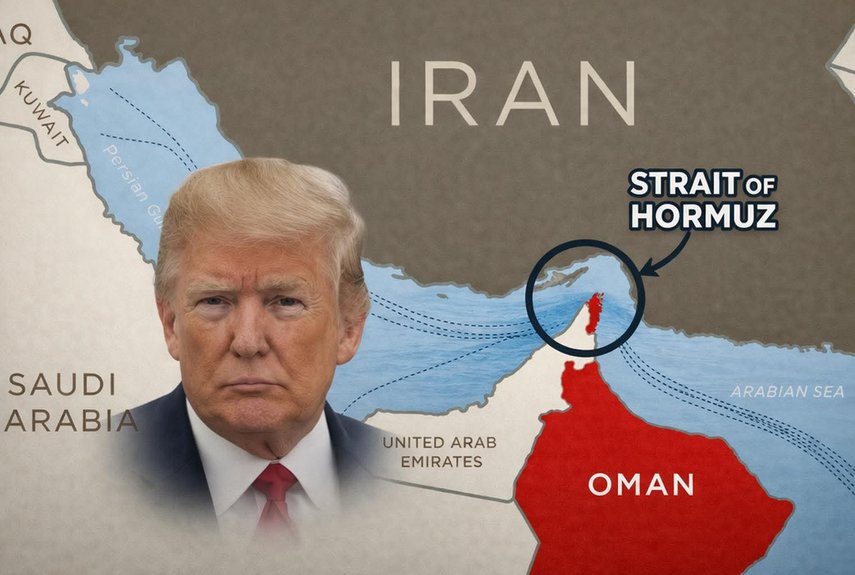
At the center of the crisis is the Strait of Hormuz, a narrow but vital waterway bordered by Iran to the north and Oman to the south. This passage serves as the world’s most critical oil transit route, handling the bulk of crude exports from Gulf nations.
Every day, millions of barrels of oil from countries like Saudi Arabia, Iraq, Qatar, Kuwait, Bahrain, and the United Arab Emirates pass through this channel on their way to international markets. Before the conflict, roughly 20 million barrels flowed through the strait daily—about 20% of global seaborne oil trade.
While alternative pipelines exist, they are far from sufficient to replace the massive volume transported through the strait, making it a choke point for global energy supply.
Since the outbreak of hostilities, Iran has disrupted movement through the waterway. Although Iranian authorities insist the strait is not completely closed, access is now selective. Ships linked to countries like China, India, and Turkey are reportedly allowed passage under strict conditions, while vessels associated with rival nations have faced drone and missile attacks. Several ships have been damaged, and casualties have been reported, though details remain uncertain.
The growing risk has forced many global shipping firms to avoid the route entirely, significantly reducing traffic. This disruption has already sent shockwaves through global markets. Brent crude prices have surged past $100 per barrel, a sharp jump from under $70 before the crisis began. The ripple effect is being felt worldwide, as rising fuel costs drive up transportation and the general cost of goods.
In a dramatic escalation, former U.S. President Donald Trump has issued a 48-hour ultimatum demanding that Iran restore full access to the strait. He warned that failure to comply could trigger U.S. strikes on critical infrastructure, including power facilities. Iran has firmly rejected the warning, vowing retaliation against any form of attack.
With no diplomatic talks underway and tensions intensifying by the day, the situation remains volatile—and the risk of a broader conflict looms large.